
The image is unmistakable: a physique that defies natural genetic limits—granite-like muscle density, vascularity like a road map, and recovery that seems superhuman. For dedicated bodybuilders and athletes pushing past plateaus, the allure of anabolic-androgenic steroids (AAS) can be potent. They represent a key to a forbidden door, promising accelerated achievement in a realm where every advantage counts.
Yet, this path exists within a stark contradiction. While their use persists in certain fitness subcultures, anabolic steroids carry severe legal penalties, universal sports bans, and a daunting list of potential health consequences. This guide serves as a dispassionate textbook chapter, not a how-to manual. Our purpose is to build your foundational understanding, clearly separate myth from clinical reality, and underscore why this is arguably the most consequential decision a fitness enthusiast can make.
Disclaimer: This article is for informational purposes only. The non-prescription use of anabolic-androgenic steroids is illegal in most countries, including the United States where they are classified as Schedule III controlled substances, and poses serious risks to health. We do not endorse or promote their use.
Chapter 1: The Biochemical Engine: What Exactly Are Anabolic Steroids?
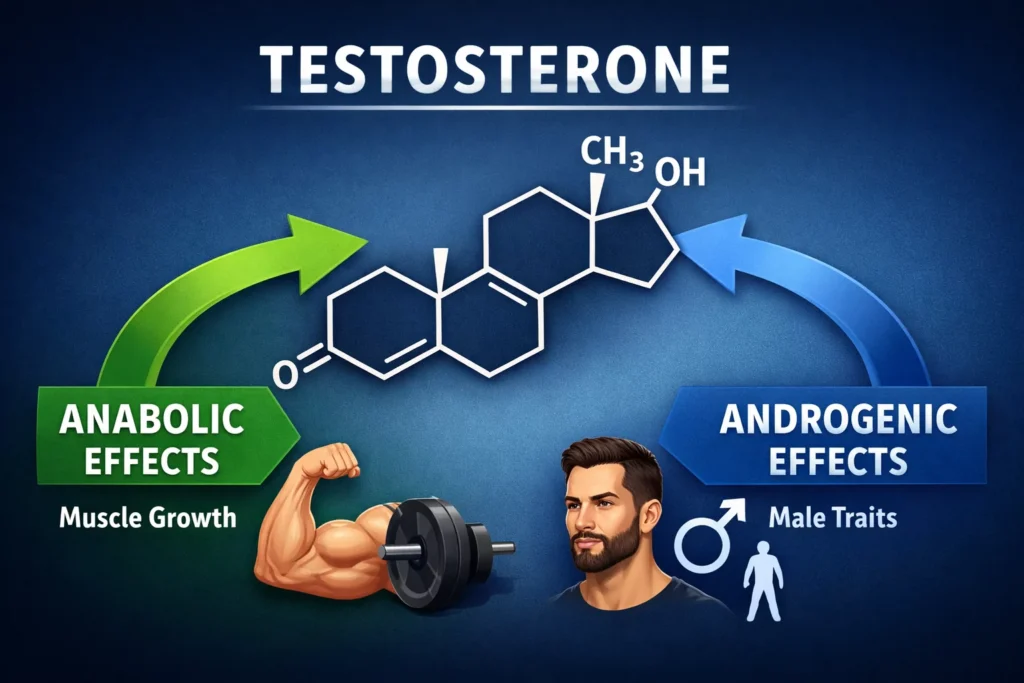
At their core, anabolic-androgenic steroids (AAS) are synthetic derivatives of testosterone, the primary male sex hormone. The name itself reveals the dual nature of these compounds:
- Anabolic Effects: Referring to tissue-building. This is the promotion of protein synthesis and nitrogen retention within muscle cells, leading to increased muscle mass, strength, and bone density.
- Androgenic Effects: Referring to the development and maintenance of male sexual characteristics. This includes facial hair, deepening of the voice, and sex drive.
The eternal challenge for pharmacologists has been the “holy grail”: creating a compound with strong anabolic properties but minimal androgenic side effects. Despite decades of development, this separation has never been fully achieved—the two effects are intrinsically linked. Every AAS carries a ratio of anabolic to androgenic potency, a concept known as the therapeutic index, but all retain the capacity for both types of effects.
Chapter 2: The Arsenal: Understanding Common Compounds
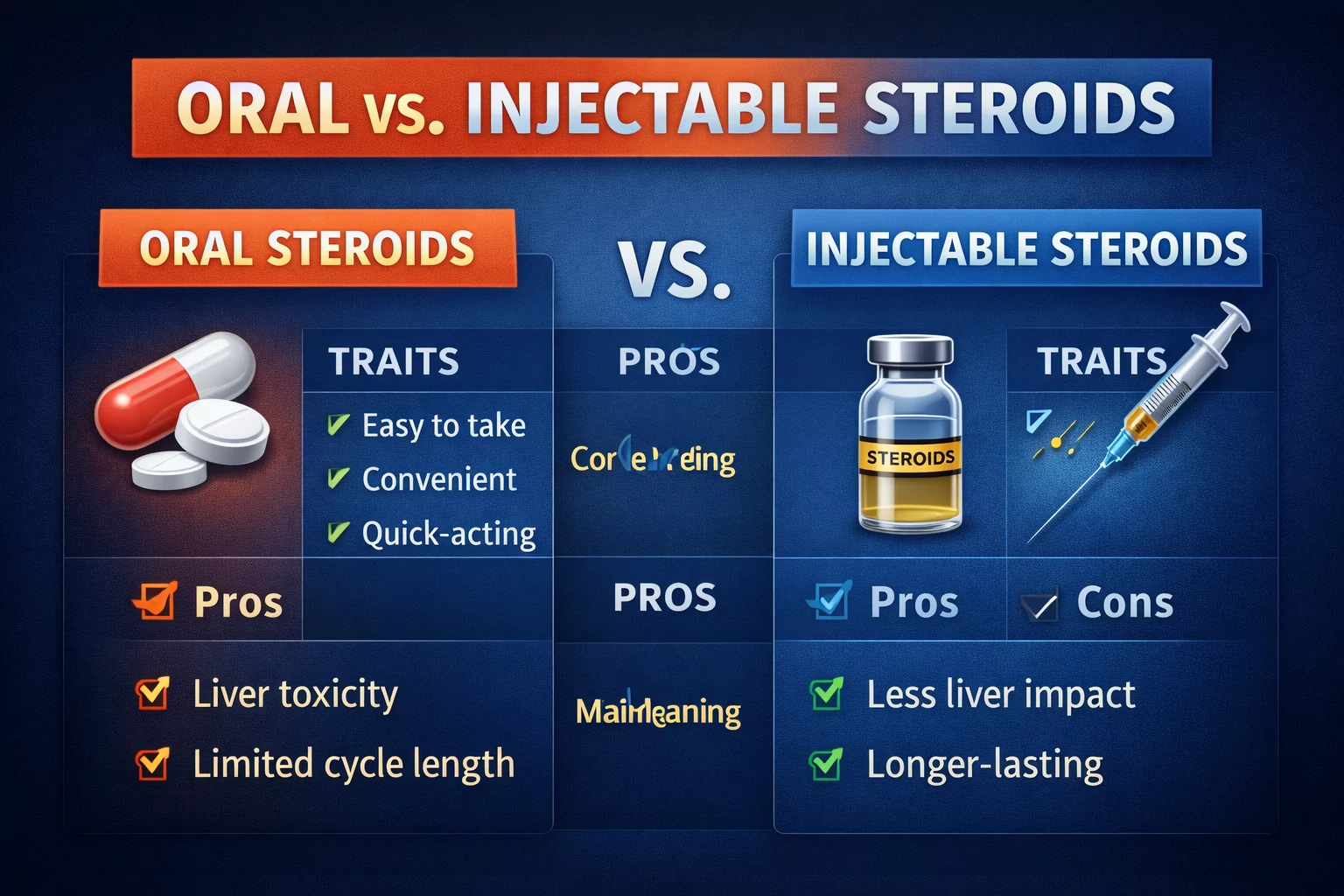
AAS are typically divided into two main categories, defined by their administration and chemical structure.
1. Oral Steroids (C17-aa Alkylated):
These are tablets or liquids taken by mouth. To survive the first pass through the liver, they are chemically altered (alkylated), which makes them hepatotoxic—harsh on the liver. They often have shorter half-lives, requiring more frequent dosing. Examples include Dianabol (methandrostenolone), Anadrol (oxymetholone), and Winstrol (stanozolol).
2. Injectable Steroids (Esters):
These are oil-based solutions injected into muscle tissue. The testosterone molecule is attached to an “ester” chain (like enanthate or cypionate), which controls its release rate into the bloodstream. They bypass first-pass liver metabolism but carry risks of infection, abscess, and oil embolism if improperly administered.
Compound “Personalities”:
- Testosterone (Enanthate/Cypionate): The baseline reference. Used for both bulking and cutting, it provides all effects (good and bad) against which others are compared.
- Nandrolone (Deca-Durabolin): Known for moderate anabolic effects with a reputation for being easier on joints, but noted for potential progesterone-related side effects.
- Trenbolone: Notoriously potent with a strong anabolic ratio, but equally notorious for severe side effects like night sweats, aggression, and cardiovascular strain.
Crucial Context: The Support Cast (PCT & Ancillaries)
Any discussion of AAS is incomplete without mentioning the substances required to manage their consequences. Post-Cycle Therapy (PCT) (using SERMs like Tamoxifen) aims to restart the body’s natural testosterone production after a cycle. Aromatase Inhibitors (AIs) are used during a cycle to control estrogen conversion and prevent gynecomastia. A critical point: Not planning for PCT and side-effect management is planning for long-term hormonal failure.
Chapter 3: The Price of Power: A System-by-System Breakdown of Risks
The adverse effects of AAS are not mythical; they are well-documented in medical literature. Understanding them requires a full-body perspective.
- Cardiovascular System: AAS can negatively alter cholesterol profiles, drastically lowering HDL (good) cholesterol and raising LDL (bad) cholesterol. This, combined with increased red blood cell count (polycythemia) and potential hypertension, significantly elevates the risk for atherosclerosis, heart attack, and stroke. The National Institutes of Health (NIH) maintains resources on steroid abuse and its effects on the heart.
- Endocrine System: Exogenous testosterone signals the body to shut down its own natural production—a condition known as hypogonadism. This can lead to testicular atrophy and prolonged, sometimes permanent, infertility. Recovery is not guaranteed and often requires medical intervention.
- Hepatic System: Oral steroids, due to their alkylated structure, are particularly hepatotoxic. Risks range from elevated liver enzymes to peliosis hepatis (blood-filled cysts) and even hepatocellular tumors.
- Psychological Effects: While “roid rage” is an oversimplification, AAS can exacerbate underlying mental health conditions. Users may experience increased aggression, anxiety, paranoia, and severe depression upon cessation, potentially leading to dependency.
- Dermatological & Irreversible Effects: These include severe acne, accelerated male-pattern baldness in genetically predisposed individuals, and gynecomastia (development of breast tissue in men). For women, virilization effects like voice deepening and clitoral enlargement are often irreversible.
Chapter 4: The Real-World Ecosystem: Beyond the Biochemistry
The risks extend beyond physiology into a dangerous and unregulated ecosystem.
- The Black Market: Sourcing AAS without a prescription means navigating a black market rife with mislabeled, under-dosed, or contaminated products. Substances may be cut with toxins or contain entirely different, more dangerous compounds. There is zero quality control.
- The “Bro-Science” Gap: Dosing protocols and cycling advice often come from non-medical sources like online forums or gym lore. This lack of evidence-based information leads to dangerous practices and underestimation of risks.
- The Medical Void: Using AAS illicitly means operating without legitimate medical oversight. There is no doctor to monitor critical biomarkers like blood pressure, lipids, hematocrit, or hormone panels through regular bloodwork—a reckless gamble with one’s health.
Chapter 5: The Legal and Ethical Labyrinth
- Legal Status: In the U.S., AAS are classified as Schedule III controlled substances. Illegal possession can result in felony charges, substantial fines, and imprisonment. Distribution carries even heavier penalties.
- Sports Sanctions: All major athletic bodies—from the World Anti-Doping Agency (WADA) to the NCAA and professional leagues—ban AAS. A positive test results in suspensions, stripped titles, and permanent damage to an athlete’s career and reputation.
- Personal Ethos: Beyond rules, there’s a personal question: How does using a powerful synthetic hormone align with your definitions of “achievement,” “health,” and the essence of your sport or fitness journey? It’s a question of integrity versus outcome.

Conclusion: Informed Consent at Its Absolute Extreme
If, after absorbing this information, one still contemplates this path, certain actions become non-negotiable forms of minimum due diligence:
- Commit to Bloodwork: Comprehensive panels before, during, and after any cycle are mandatory, not optional. It’s the only way to gauge the impact on your body.
- Secure PCT & Ancillaries Before Starting: Never begin a cycle without having everything needed to finish it and attempt recovery on hand.
- Know Your Baseline Health: Pre-existing cardiac, hepatic, or psychiatric conditions are definitive contraindications.
- Acknowledge the Gambit: You are trading potential short-term gains for confirmed, long-term health risks. Some damage may be irreversible.
The pursuit of physical excellence is a marathon, built on the foundational arts of disciplined training, meticulous nutrition, and strategic recovery. Anabolic steroids represent a dangerous shortcut that often becomes the primary variable, overshadowing and undermining the very craft it seeks to enhance. True mastery lies not in circumventing nature’s limits with synthetic force, but in mastering the sustainable science of pushing them to their genuine, natural peak.